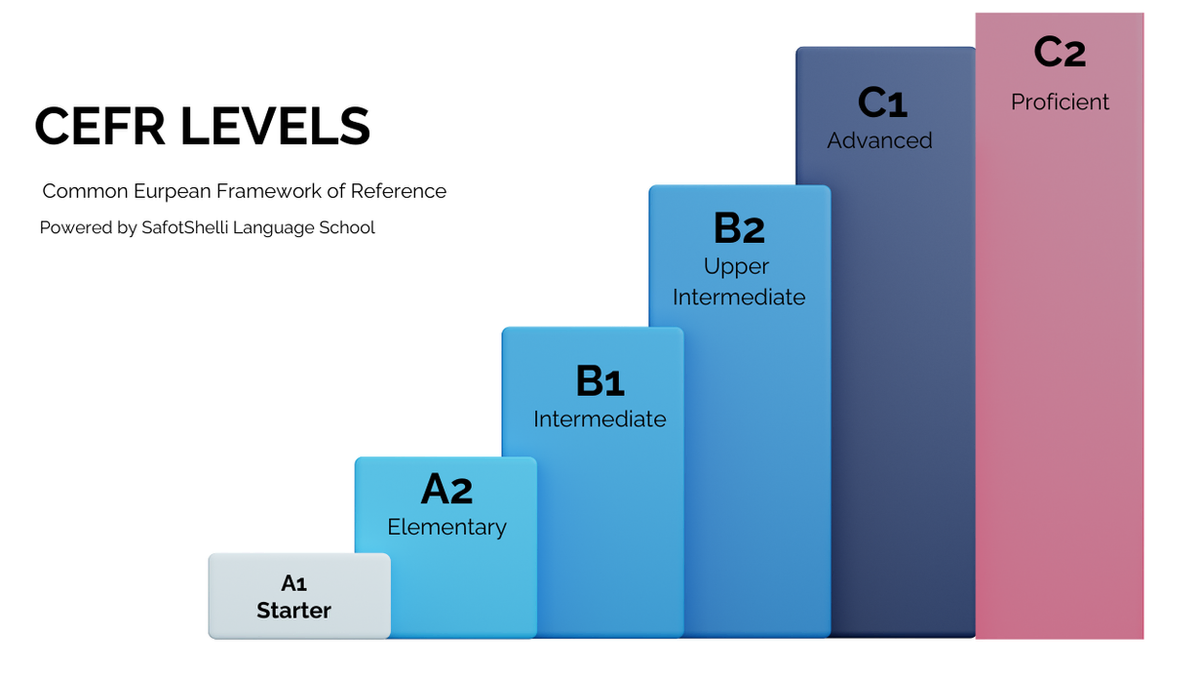
CEFR English Evaluation Test
Welcome to the CEFR English Evaluation Test.
Please read the following instructions carefully:
- This test is designed to assess your English language proficiency according to the Common European Framework of Reference for Languages (CEFR).
- The test consists of Listening, Reading, Grammar, Vocabulary, Writing, and Speaking sections.
- For the Listening section, click the "Play Audio" button to hear the audio for each question. This uses your browser's text-to-speech capability. Audio scripts are also available via the "Show Script" button.
- The Listening, Reading, Grammar, and Vocabulary sections are multiple-choice and will be scored automatically. You will receive a preliminary estimated CEFR level based on these sections.
- The Writing and Speaking sections are designed to simulate a full assessment. Your responses will be recorded as part of this demonstration.
- Please answer all questions to the best of your ability. Good luck!
Note on Audio Playback: This test uses Text-to-Speech (TTS) for audio. Ensure your browser supports TTS and your device's sound is on. If TTS is unavailable or you prefer, you can use the "Show Script" button to read the audio content.
Listening
For each question, click "Play Audio" to hear the question content, then choose the best answer.
1. What time does the library open? Show Script
A. 9 AM
B. 10 AM
C. 11 AM
2. When are the friends planning to meet? Show Script
A. Saturday
B. Sunday
C. Both Saturday and Sunday
3. What is the main weather condition expected? Show Script
A. Sunny
B. Snowy
C. Rainy and cloudy
4. What is the speaker's favorite hobby? Show Script
A. Reading
B. Cooking
C. Gardening
5. How does the report describe the museum's opening? Show Script
A. Disappointing
B. Successful
C. Average
6. What was the woman's main criticism of the film? Show Script
A. The acting was poor.
B. The special effects were bad.
C. The story was difficult to understand.
7. What is the main challenge mentioned in sustainable urban development? Show Script
A. Lack of funding for urban projects.
B. Finding a balance between economy and environment.
C. Insufficient community participation.
8. What is Colleague B likely to do about the report deadline? Show Script
A. Finish the report by Friday as planned.
B. Ask for more time to complete the report.
C. Delegate the data analysis to someone else.
9. What is the main selling point highlighted for the 'ConnectX' phone? Show Script
A. Its low price.
B. Its advanced features like battery and camera.
C. Its wide availability in stores.
10. What is the scientist implying about the discovery? Show Script
A. It has limited applications.
B. Its potential uses are broader than first thought.
C. It is primarily useful for medical purposes.
11. What are the people planning a trip to Rome likely to do about flights? Show Script
A. Book an expensive morning flight.
B. Look for cheaper evening flights.
C. Postpone their trip to Rome.
12. What is the customer's problem with the coffee machine? Show Script
A. The coffee machine was delivered late.
B. The coffee machine is not working correctly.
C. The customer wants to cancel her order.
13. What aspect of 'The Island Mystery' book did Speaker 1 particularly enjoy? Show Script
A. The historical accuracy.
B. The character development.
C. The suspenseful plot.
14. What is the university lecturer emphasizing about industrial agriculture? Show Script
A. The minimal role of agriculture in climate change.
B. The urgent need for changes in farming to address climate change.
C. The economic benefits of industrial agriculture.
15. What do the art critics agree on regarding the artist's later work? Show Script
A. It is less technically skilled than her early work.
B. It shows more emotional expression and innovation.
C. It is heavily influenced by Western art traditions.
Reading
1. Read the sign: "Park Closes at Sunset." What does this mean?
A. You can enter the park any time.
B. The park closes when the sun goes down.
C. The park is open all night.
2. Read the email excerpt: "Dear Mr. Smith, Thank you for your email. We will respond to your query within 24 hours. Sincerely, Customer Service." What will Customer Service do?
A. Call Mr. Smith immediately.
B. Ignore Mr. Smith's email.
C. Reply to Mr. Smith's email soon.
3. Text: "Maria loves to bake cakes. She often tries new recipes on weekends. Her friends always enjoy her delicious creations." What does Maria enjoy doing?
A. Eating at restaurants.
B. Making cakes.
C. Reading recipe books.
4. Advertisement: "SALE! 50% off all winter coats. This week only!" What is special about this week?
A. New winter coats are arriving.
B. Winter coats are cheaper than usual.
C. All coats in the store are on sale.
5. Article excerpt: "The city council has announced plans to build a new public library. Construction is expected to begin next year and will take approximately two years to complete. The new facility will offer more books, computer access, and community rooms." What is the main purpose of this new building?
A. To provide a new space for council meetings.
B. To offer enhanced library services to the public.
C. To create construction jobs for two years.
6. From a blog post: "Learning a new language can be challenging, yet incredibly rewarding. It opens up new cultures and ways of thinking. While fluency takes time and dedication, even basic conversational skills can enrich travel experiences and personal connections." What is the author's overall view of language learning?
A. It is too difficult for most people.
B. It offers significant benefits despite the effort required.
C. It is mainly useful only for travelers.
7. Product Review: "The 'SwiftClean' vacuum cleaner is lightweight and easy to maneuver. However, its suction power is somewhat disappointing on thicker carpets, and the dustbin capacity is smaller than I anticipated, requiring frequent emptying." What is one disadvantage of the 'SwiftClean' vacuum?
A. It is too heavy to carry.
B. It works very well on all types of carpets.
C. It doesn't hold much dust.
8. Excerpt from a short story: "The old house stood on a hill overlooking the town. It had been empty for years, and locals whispered tales of strange noises and flickering lights. Despite its dilapidated appearance, a sense of mystery and history clung to its weathered walls." How is the house generally perceived by the locals?
A. As a modern and welcoming place.
B. With a mixture of fear and curiosity.
C. As an ordinary, uninteresting building.
9. Scientific Abstract: "This study investigates the long-term cognitive benefits of bilingualism in elderly populations. Preliminary findings suggest that individuals who regularly use two or more languages may exhibit enhanced executive functions and a delayed onset of age-related cognitive decline compared to monolingual peers." What is a potential benefit of bilingualism mentioned in the abstract?
A. It guarantees protection against all diseases.
B. It might help maintain brain health in older age.
C. It makes learning other subjects easier.
10. Literary Analysis: "In her seminal novel, the author masterfully employs irony to critique societal norms. The protagonist's outward conformity masks a deep-seated rebellion, a narrative choice that invites readers to question the superficiality of the world depicted." What literary technique is highlighted as central to the novel?
A. Direct characterization.
B. The use of irony.
C. A straightforward, linear plot.
11. Read the text: "The phenomenon of 'urban heat islands' occurs when cities experience much warmer temperatures than nearby rural areas. This is primarily due to human activities, such as the modification of land surfaces (e.g., paving) and the release of waste heat from buildings and vehicles." What is the main cause of urban heat islands?
A. Natural climate variations.
B. Increased rainfall in cities.
C. Human activities and infrastructure in cities.
12. Excerpt from an employee handbook: "All employees are entitled to 20 days of paid annual leave, which must be requested at least two weeks in advance through the HR portal. Unused leave days may, under certain circumstances and with managerial approval, be carried over to the next calendar year, up to a maximum of 5 days." What is true about unused leave days?
A. They are automatically lost if not used.
B. They can always be carried over without restriction.